HHR Train 2026: Haramain High-Speed Railway
Traveling between the Two Holy Mosques has never been faster or easier. The HHR Train, also known as the Haramain High-Speed Railway, whisks passengers at up to 300 km/h. It cuts the journey from Makkah to Madinah to about 2 hours and 20 minutes. This modern marvel delivers speed, comfort, and reliability that buses and taxis cannot match.
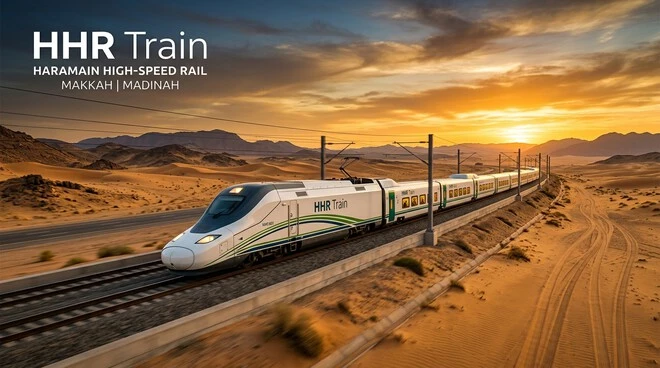
The Haramain High-Speed Railway (HHR) is Saudi Arabia’s flagship high-speed rail project. Operated by Saudi Arabia Railways (SAR), it forms a key part of Vision 2030. The 449-kilometer electrified line links the holy cities of Makkah and Madinah while serving major hubs in between.
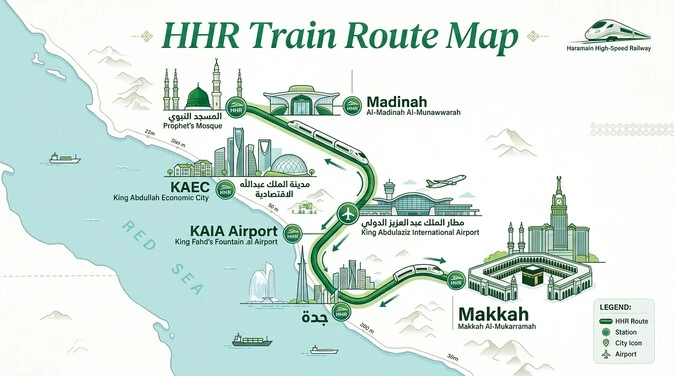
Five strategic stations serve the route:
- Makkah Station (Rusaiyfah, near the Grand Mosque)
- Jeddah Station (Al-Sulimaniyah)
- King Abdulaziz International Airport (KAIA)
- King Abdullah Economic City (KAEC)
- Madinah Station
This network connects pilgrims, residents, and tourists seamlessly across the Hejaz region.
Why choose the HHR Train?
It offers unmatched speed and punctuality. Road trips during peak Umrah or Hajj seasons often face heavy traffic and take 4–6 hours. The HHR Train provides a smooth, air-conditioned ride with minimal delays. Modern Talgo 350 trains deliver quiet comfort, ample legroom, and onboard facilities tailored for long journeys. Families, solo travelers, and pilgrims in Ihram all benefit from its clean, secure environment.
Economy Class keeps travel affordable. Business Class adds extra space, privacy, and premium service. The train supports Saudi Arabia’s goal of efficient, sustainable pilgrim mobility while reducing road congestion and environmental impact.
This comprehensive 2026 guide covers everything you need for a stress-free trip. You will find current timetables, ticket prices, step-by-step booking instructions, luggage rules, onboard experiences, and practical tips from real travelers. Whether you plan a quick Jeddah Airport to Makkah transfer or a full Makkah to Madinah journey, this resource helps you travel confidently.
What is the HHR Train? History & Key Facts
The HHR Train, officially the Haramain High-Speed Railway, stands as Saudi Arabia’s pioneering high-speed rail system. It connects the Two Holy Mosques in Makkah and Madinah with modern efficiency and comfort. Launched in 2018, this electric railway has transformed travel for millions of pilgrims, residents, and tourists. It aligns perfectly with Saudi Vision 2030’s goals of diversified infrastructure and enhanced pilgrim experiences.
Construction started in March 2009. The project faced delays but reached full public service on 11 October 2018. Spanish-led consortia, including Talgo and ADIF, partnered with Saudi teams to deliver this landmark initiative. The total investment exceeded $10–16 billion, reflecting Saudi Arabia’s commitment to world-class transport.
The Haramain High-Speed Railway forms a core pillar of Vision 2030. It reduces reliance on oil, promotes sustainable mobility, and boosts tourism and economic connectivity in the western region. By offering a safe, fast alternative to road travel, it eases congestion during Hajj and Umrah seasons. It also supports environmental goals through electric operation and lower emissions compared to buses or taxis.
Technical Specifications
The HHR Train operates on a 449–450 km electrified double-track line. It runs at a commercial speed of 300 km/h, with design capabilities up to 320–350 km/h. The 25 kV AC overhead catenary powers the system, while advanced ERTMS Level 2 signaling ensures safety and precision.
Rolling stock comes from Spain’s Talgo. The fleet features Talgo 350 SRO trains (based on Renfe Class 102). Each set measures about 215 meters long and includes 13 coaches plus two power cars. These trains deliver smooth rides even at high speeds, thanks to Talgo’s unique articulated design and tilting technology that handles curves effectively.
Key specs include:
- Power: 8,800 kW total output
- Capacity: 417 seats per train (304 Economy + 113 Business)
- Features: Full air-conditioning optimized for desert heat, Wi-Fi, power outlets, and accessibility options
- Safety: Advanced braking, monitoring systems, and strict security protocols
Saudi Arabia Railways (SAR) operates the line. Recent expansions include orders for 20 additional Talgo trains, aiming to increase annual capacity beyond 30 million passengers.
The Stations
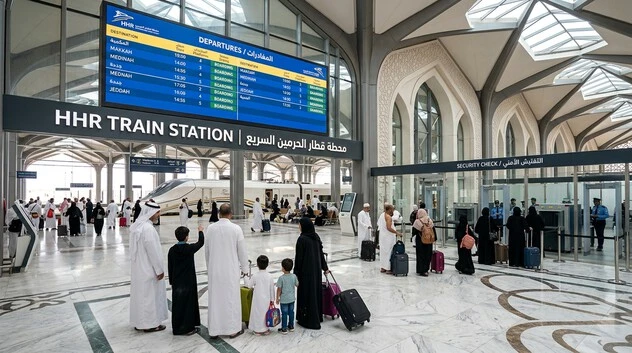
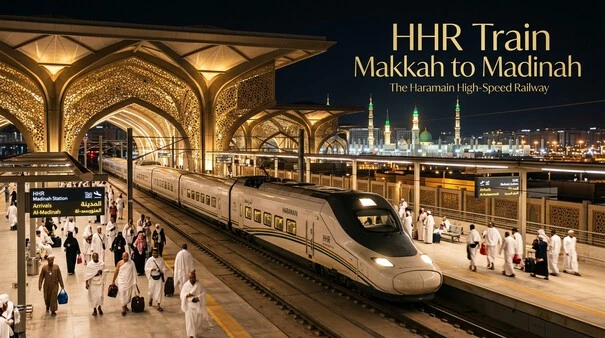
Five modern stations serve the HHR network. Each reflects Islamic architecture while incorporating smart design for high-volume pilgrim traffic.
- Makkah Station (Rusaiyfah District): Located near the Grand Mosque via the 3rd Ring Road. It serves as the southern gateway with excellent access for Umrah visitors. Muslim-only access applies here.
- Madinah Station (King Abdulaziz Street-East): Positioned for convenient reach to the Prophet’s Mosque. It handles heavy demand during peak religious seasons.
- Jeddah Station (Al-Sulimaniyah): Centrally located in Al-Naseem District. This stop links urban Jeddah with the broader network.
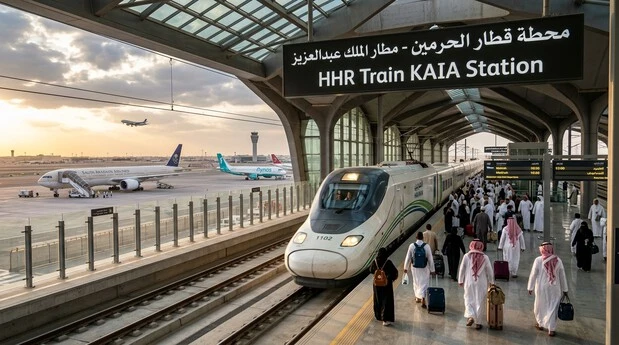
- King Abdulaziz International Airport (KAIA): Connected via a 3.75 km branch line. It offers seamless transfers for international arrivals, making it ideal for pilgrims flying in.
- King Abdullah Economic City (KAEC): Situated in Rabigh, this station supports business travelers and residents in the growing economic zone.
Stations feature natural lighting, prayer areas, retail, and efficient crowd management. Designs by Foster + Partners emphasize cultural sensitivity and functionality.
Travel Classes: Economy vs Business
HHR Train offers two main classes tailored to different needs and budgets. Every train maintains consistent high standards of cleanliness, punctuality, and onboard service.
| Feature | Economy Class (2+2 seating) | Business Class (2+1 seating) |
| Seating | Standard legroom, foldable trays, power outlets | Wider seats, extra legroom (~40″+), more privacy |
| Capacity per Train | 304 seats | 113 seats |
| Amenities | AC, Wi-Fi, clean restrooms, cafeteria access | Priority boarding, lounge access, complimentary snacks/drinks, quieter cabin |
| Best For | Budget travelers, families, short trips | Comfort on longer journeys, business travelers, VIP experience |
| Price Range (example) | Starting ~SAR 50–170 (route-dependent) | Starting ~SAR 100–380+ (route-dependent) |
| Accessibility | Dedicated seats available | Enhanced options including special needs |
Economy Class provides reliable, affordable travel with good comfort for most pilgrims. Business Class delivers a premium experience with extra space and service — worth considering for longer Makkah-Madinah trips or those seeking rest.
Both classes prohibit animal transport and enforce modest dress code in line with Saudi traditions. The fifth coach usually houses the cafeteria, with trolley service available.
Broader Impact and Operations
The Haramain High-Speed Railway has carried over 60 million passengers since opening. Annual ridership reached nearly 7 million in 2023, with strong growth during Ramadan and Hajj. It has become the preferred choice for intercity travel in the Hejaz region.
SAR continues to invest in reliability, fleet expansion, and digital services. The HHR Train supports Saudi Arabia’s modernization while preserving the spiritual focus of travel between the holy cities. Its success demonstrates how high-speed rail can blend efficiency, culture, and sustainability.
This foundation sets the stage for practical details in the following sections — from timetables and booking to real traveler experiences. Understanding these core facts helps you appreciate why the HHR Train has quickly become essential for millions visiting the Two Holy Mosques.
HHR Train Routes & Timetables
The Haramain High-Speed Railway (HHR Train) offers efficient connections across its network. Multiple daily services link the holy cities of Makkah and Madinah with convenient stops in Jeddah, King Abdulaziz International Airport (KAIA), and King Abdullah Economic City (KAEC). Trains run frequently, making same-day travel between key destinations easy for Umrah pilgrims, Hajj visitors, and residents.
Popular Routes and Durations
Here are the most traveled routes with typical durations and sample fares (as of mid-2026). Prices use dynamic pricing and vary by date, demand, booking time, and class. Always verify live rates on the official site.
| Route | Duration | Economy (approx.) | Business (approx.) |
| Makkah ↔ Madinah | ~2h 20m | SAR 150–250+ | SAR 300–450+ |
| Jeddah ↔ Makkah | 45–50 min | SAR 46–80+ | SAR 100–200+ |
| Jeddah Airport (KAIA) → Makkah | ~1h 10m | SAR 50–90+ | SAR 120–250+ |
| Jeddah ↔ Madinah | ~1h 50m | SAR 115–200+ | SAR 210–380+ |
| Makkah ↔ KAEC | ~1h | SAR 80–140+ | SAR 160–280+ |
| KAIA ↔ Madinah | ~2h 40m–3h | SAR 160–260+ | SAR 320–500+ |
| KAEC ↔ Madinah | ~1h 20m | SAR 100–180+ | SAR 200–350+ |
Notes on fares:
- Economy Class suits most pilgrims with solid comfort at lower cost.
- Business Class provides wider 2+1 seating, extra legroom, priority boarding, and complimentary refreshments.
- Peak periods (Hajj, Ramadan) see higher prices and faster sell-outs. Early booking secures the best rates. Station purchases often add extra fees.
These times reflect high-speed running with brief station stops. The full Makkah-Madinah journey covers 449 km smoothly, even at 300 km/h.
How to Check Live Timetables
Real-time schedules change based on demand and maintenance. Always use official sources for accuracy.
- Visit the official website: sar.hhr.sa/timetable.
- Select your departure and arrival stations.
- Choose your travel date and search.
- Review available trains, departure times, arrival times, and seat availability.
Pro tip: Download the HHR Train App (available on Google Play and App Store). It offers instant updates, seat maps, and direct booking. The app shows live status, delays, and platform information. Check 24–48 hours before travel, especially during busy seasons.
Trains typically operate from early morning until late night. Makkah-Madinah services run roughly hourly during peak hours. KAIA connections align well with flight arrivals for seamless transfers.
Seasonality and 2026 Considerations
Demand surges during religious seasons, affecting availability and prices.
- Hajj Season (2026): Expect maximum crowds and premium pricing. Business Class group bookings may reach SAR 850+ on peak days. Book months ahead. Extra trains often run, but seats fill quickly.
- Ramadan and Umrah Peaks: Higher frequency on Makkah-Madinah and airport routes. Prices rise moderately. Night trains prove popular for those balancing worship and rest.
- Off-Peak Periods: Weekdays and non-religious months offer lower fares and easier bookings. Ideal for relaxed travel or families.
2026 Outlook: SAR continues fleet expansion with more Talgo trains. This should improve capacity and reduce sell-outs. Monitor the official site for announcements on new services or temporary changes during major events.
Dynamic pricing rewards early planners. Last-minute tickets cost significantly more, especially in Business Class. Set calendar alerts for your dates and book as soon as possible.
Practical Route Tips for Pilgrims
- Airport Connections: KAIA station provides direct, stress-free access after customs. Many pilgrims choose this over taxis for speed and fixed pricing.
- Jeddah Stop: Convenient for city visits or layovers before heading to the holy cities.
- KAEC: Useful for business travelers or those staying in the economic city. It breaks longer journeys effectively.
- Full Network Flow: You can combine segments easily — for example, fly into KAIA, train to Makkah, then continue to Madinah later.
The HHR Train network eliminates long road journeys and reduces fatigue. It lets you focus on the spiritual purpose of your visit rather than travel hassles.
This section equips you with the core route knowledge needed to plan effectively. Next, we dive into detailed ticket prices, offers, and booking strategies to help you secure the best deal.
HHR Train Ticket Prices & Offers
HHR Train ticket prices on the Haramain High-Speed Railway use dynamic pricing. They adjust based on real-time factors to balance demand and availability. Understanding these factors helps you secure better fares for your journey between Makkah, Madinah, Jeddah, and other stations.
Current Pricing Factors
Several key elements determine your final cost:
- Travel Date and Season: Peak periods like Hajj 2026 and Ramadan push prices higher. Off-peak weekdays and non-religious months offer lower rates. For example, Makkah to Madinah Economy fares can start at SAR 150–170 during normal times but rise significantly during Hajj.
- Route and Distance: Shorter trips cost less. Jeddah to Makkah starts around SAR 46–80 in Economy. Longer routes like Jeddah Airport to Madinah reach SAR 160–260.
- Travel Class: Economy provides excellent value. Business Class commands a premium for extra comfort. Prices typically double or more for Business.
- Demand and Booking Time: High-demand trains sell out fast with rising prices. Early booking (7–14 days or more) unlocks the lowest fares. Last-minute purchases, especially at stations, add 15 SAR surcharges.
- Passenger Type: Children (2–12 years) and infants receive discounts. Special needs passengers qualify for dedicated assistance and potential reductions.
Current sample ranges (mid-2026, subject to change):
- Jeddah ↔ Makkah: Economy SAR 46–80, Business SAR 100–200
- Makkah ↔ Madinah: Economy SAR 150–250, Business SAR 300–450+
- Jeddah Airport → Makkah: Economy SAR 50–90, Business higher
Always check live prices on sar.hhr.sa, as they update constantly.
How to Find the Cheapest Tickets & Promo Codes
Smart planning delivers substantial savings on HHR Train tickets.
- Book Early via Official Channels: Use the official website (sar.hhr.sa) or HHR Train App. These avoid third-party fees and provide direct access to the lowest available fares.
- Monitor for Promotions: SAR runs seasonal offers, such as Eid discounts (e.g., 15% off with codes like ADHA26 or EID26) and occasional 50% reductions on specific routes. Sign up for the newsletter on the official site for alerts.
- Flexible Dates: Shift travel by a day or two for lower demand slots. Mid-week trains often cost less than weekends or peak prayer times.
- Compare Classes and Times: Economy almost always offers the best value. Avoid station purchases to skip extra fees.
- Group and Family Deals: Book together for potential availability in dedicated areas. Some partners offer block seating for larger parties.
Pro Tips:
- Set price alerts in the app.
- Book at least 1–2 weeks ahead to beat dynamic surges.
- During Hajj 2026, secure seats months in advance through authorized channels.
Promo codes appear sporadically. Check the official site during festivals or national events. Avoid unverified third-party codes that may not work.
Economy vs Business Class: Detailed Comparison
Both classes deliver a clean, punctual, and safe ride at 300 km/h. The main differences lie in space, amenities, and overall experience.
| Aspect | Economy Class (2+2 Seating) | Business Class (2+1 Seating) |
| Seat Comfort | Standard reclining seats, good legroom (~32″) | Wider, premium seats with extra legroom (~40″+) |
| Privacy & Noise | Open layout, family-friendly | Quieter cabin, more private |
| Boarding & Access | Standard | Priority boarding, station lounge access |
| Amenities | AC, Wi-Fi, power outlets, clean restrooms | Complimentary snacks/drinks, better service |
| Best For | Budget pilgrims, short trips, families | Longer journeys, comfort seekers, elders |
| Value for Money | Excellent — covers most needs at lower cost | Premium experience justifies extra cost for many |
Economy Class feels modern and comfortable for the short 2–3 hour journeys. Most travelers find it sufficient, especially on routes like Jeddah to Makkah. Many pilgrims report it as luxurious enough without the premium price.
Business Class shines on Makkah-Madinah trips. Wider seats, priority service, and lounge access reduce fatigue. It proves particularly valuable after long flights or for those traveling with elderly family members. However, some reviews note that the short travel time makes the price difference less essential for everyone.
Value Verdict: Choose Economy for most Umrah/Hajj trips to maximize savings. Upgrade to Business when rest and space matter more than budget. Both classes maintain high cleanliness and reliability.
Group Booking & Family Options
Traveling with family or groups becomes straightforward on the HHR Train.
- Family Travel: Book seats together easily online. Children receive age-based discounts. Family compartments or adjacent seating options help keep everyone close. Infants travel at reduced or no cost depending on policy.
- Group Bookings: Defined as 11+ passengers. Enable the Group Booking option on the booking page. This secures blocks of seats and simplifies coordination. Availability opens closer to departure dates (up to 4 days in some cases). Large groups during Hajj should contact SAR support early.
Practical Advice:
- Enter all passenger details accurately (names must match IDs).
- Special needs groups can request wheelchair bays in Business Class (limited per train).
- Confirm group bookings directly to avoid last-minute issues.
The HHR Train makes group pilgrim travel efficient and less stressful than road options. Early coordination ensures everyone travels together comfortably.
Mastering these pricing strategies and options helps you save money while enjoying a premium experience. With dynamic fares and occasional promotions, proactive booking remains your best tool for affordable, reliable travel on Saudi Arabia’s flagship high-speed railway.
This knowledge prepares you for the next step: the exact booking process. Follow the detailed guide ahead to secure your seats smoothly.
How to Book HHR Train Tickets Online
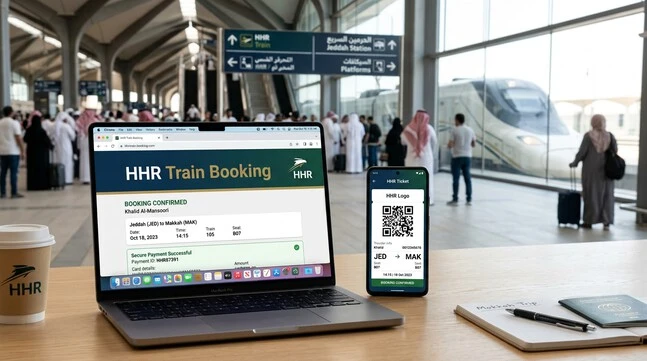
Booking HHR Train tickets on the Haramain High-Speed Railway is quick and straightforward. The official channels deliver the lowest prices and smoothest experience. Follow this guide to secure seats for your journey between Makkah, Madinah, Jeddah, KAIA, and KAEC.
1. Booking via the Official Website (sar.hhr.sa)
- Visit sar.hhr.sa and click “Book a Seat” on the homepage.
- Select your trip type (one-way or round-trip).
- Choose departure and arrival stations (e.g., Jeddah Airport to Makkah).
- Pick your travel date and number of passengers.
- Review available trains, times, classes (Economy or Business), and prices.
- Select your preferred train and seats if the map is available.
- Enter passenger details accurately — full name, passport/Iqama/ID number, and contact info. Names must match travel documents.
- Review the summary, apply any promo code if available, and proceed to payment.
- Complete payment and receive your e-ticket via email and SMS instantly.
Visual Walkthrough Note: The site features a clean interface with a prominent search form. Screenshots typically show the station selector dropdown, calendar picker, and real-time seat availability display. Print or save the QR-coded PDF ticket.
2. Booking via the HHR Train Mobile App
The official HHR Train App (available on Google Play and Apple App Store) offers the most convenient experience.
- Download “HHR Train” from your app store.
- Open the app and select departure/arrival stations, date, and passengers.
- Browse real-time options with prices and seat maps.
- Choose Economy or Business Class.
- Fill in passenger information.
- Pay securely and get instant ticket confirmation.
The app shows live availability, promotions, and platform details. It works excellently for last-minute changes and provides push notifications for updates.
3. Third-Party Sites (Use with Caution)
Platforms like Umrahme, HaramainRailway.com, or Rail.Ninja act as intermediaries. They simplify booking for international users but often add service fees. Stick to official channels for the best rates and direct support. Verify any third-party site’s legitimacy and compare final prices before purchasing. Always cross-check ticket details with SAR.
Payment Methods
The system accepts secure options:
- Visa and MasterCard (credit/debit)
- Mada (Saudi debit cards)
- Apple Pay
- STC Pay and other local wallets (availability varies)
International cards work for most users, though occasional processing issues occur. Try the app if the website fails. Payments are instant, with confirmation sent immediately.
Cancellations and Changes
You can modify or cancel tickets through the same channel used for booking (website, app, or station).
- Changes: Adjust date or class if seats remain available. Pay any fare difference.
- Cancellations: Possible with fees depending on timing (higher closer to departure). Refunds process back to the original payment method, usually within 5–14 days.
- Check exact policies during booking, as rules vary by fare type. Group bookings have stricter conditions.
Always review terms before confirming.
Pro Tips for Smooth Booking
- Book Early: Reserve 7–30 days ahead for lowest fares and best seats. Peak Hajj and Ramadan periods sell out fast.
- Avoid Station Purchases: Online or app bookings skip the 15 SAR surcharge at ticket offices.
- App Hacks: Use the mobile app for faster loading and real-time alerts. Enable notifications.
- Double-check passenger names and IDs to prevent boarding issues.
- Take screenshots of your booking confirmation.
- For groups or families, book together early to secure adjacent seats.
- Set price alerts and remain flexible with dates for savings.
These steps ensure a hassle-free experience on the Haramain High-Speed Railway. Official channels provide reliability and direct access to support.
Master this process and move confidently to your journey. The next sections cover luggage rules and what to expect at stations and onboard.
HHR Luggage Policy & Baggage Rules
The HHR Train enforces a strict yet practical luggage policy on the Haramain High-Speed Railway. Clear limits keep boarding smooth, trains on time, and space safe for all passengers traveling between Makkah, Madinah, Jeddah, KAIA, and KAEC. Understanding these rules prevents stress during your Umrah or Hajj journey.
Official Baggage Allowance
Each passenger receives the same allowance in both Economy and Business Class:
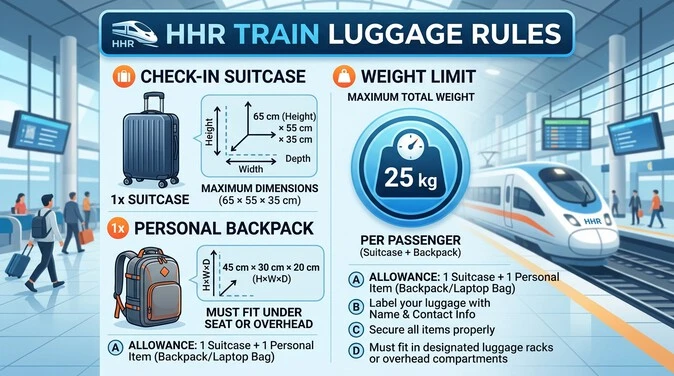
- One large suitcase: Maximum 25 kg weight and dimensions of 65 cm (height) × 55 cm (length) × 35 cm (width).
- One personal hand item: Backpack, handbag, laptop bag, camera bag, nursery bag, or similar. Suggested weight around 7 kg, though not strictly enforced if reasonable in size.
You must carry all luggage yourself from security to the train. Place large suitcases in designated racks and hand items in overhead shelves. Passengers handle their own bags throughout the trip.
This policy applies uniformly across all routes and classes. Families and groups must follow it per person, including children with paid seats. Infants on laps follow reduced rules — check official guidelines for specifics.
Excess Baggage Rules
HHR does not allow excess baggage onboard. Overweight, oversized, or extra pieces get rejected at security or boarding. Enforcement varies but tightens during peak Hajj and Ramadan seasons.
Options for extra luggage:
- Use station courier or shipping services (e.g., Saudi Post or contracted partners). Fees start around 50–70 SAR per bag, depending on route and weight. Bags arrive separately, often later the same day or next.
- Ship in advance from your hotel or arrival point.
- Hire porters at stations for help moving bags to racks (typically 15–30 SAR per trip).
Travelers report inconsistent enforcement. Some pass with slightly oversized bags, especially in Business Class or quieter trains. Others face strict checks, with bags sent separately. Plan conservatively to avoid delays.
Prohibited Items
Security follows Saudi regulations. Common prohibited items include:
- Weapons, ammunition, or sharp objects
- Explosive, flammable, or inflammable materials (including certain aerosols, lighters in bulk)
- Items that could damage the train, stain seats, or disturb others due to smell, size, or nature
- Animals (no pets allowed)
- Compressed gas containers
Pack only personal clothing, essentials, and tightly sealed food items. Avoid loose liquids or strong-smelling goods. Security screens all bags before boarding.
Real Traveler Experiences
Pilgrims share mixed stories across forums, Reddit (r/Umrah), and social media. Many complete trips without issues when staying within limits. Others face challenges with extra bags from international flights.
One common scenario: Families arriving at KAIA with multiple suitcases. Some use porters successfully. Others report bags delayed via courier, requiring extra station trips. Business Class passengers often note lighter checks, while full Economy trains during peaks see stricter enforcement.
A frequent tip from repeat Umrah travelers: Weigh and measure bags at home. Minor overruns sometimes pass, but large or multiple extra pieces risk separation from your train. Many recommend shipping gifts or shopping hauls separately rather than carrying them onboard.
Positive experiences highlight how the policy keeps aisles clear and journeys comfortable. Negative ones usually involve last-minute stress at security during busy periods.
Practical Tips for Pilgrims with Extra Luggage
Pilgrims often carry more due to gifts, dates, or Zamzam water. Prepare ahead:
- Pack Light Strategically: Limit to essentials for the train leg. Ship extra items directly to your hotel in Makkah or Madinah.
- Measure and Weigh Early: Use a luggage scale and tape measure. Choose suitcases that fit 65×55×35 cm exactly — many standard medium bags work well.
- Use Vacuum Bags: Compress clothes to reduce volume and weight.
- Coordinate with Hotels: Many Makkah and Madinah hotels offer luggage storage or forwarding services.
- Business Class Advantage: Slightly more lenient checks reported, plus priority boarding gives time to organize bags.
- Group Travel: Assign bags per person clearly. Book adjacent seats for easier management.
- Airport to Train Flow: At KAIA, clear customs first, then move to the HHR station. Allow extra time for luggage handling.
- During Peak Seasons: Book early and travel mid-week when possible. Avoid carrying shopping from Madinah to Makkah on return legs.
- Alternatives if Needed: Private transfers or buses offer more flexibility for heavy loads, though they take longer.
Follow these steps to stay compliant:
- Check dimensions and weight before leaving your accommodation.
- Use sturdy, easy-to-maneuver suitcases with wheels.
- Keep important documents and medications in your hand luggage.
- Arrive at the station 45–60 minutes early.
- Be polite and cooperative with staff — they manage high pilgrim volumes daily.
The HHR Train luggage policy supports efficient, safe travel aligned with Saudi Vision 2030. It prioritizes punctuality and comfort for all passengers heading to the Two Holy Mosques. By respecting these rules, you contribute to a smoother experience for everyone.
Staying within limits reduces fatigue and lets you focus on worship instead of logistics. For the latest updates, always visit the official SAR website or app before travel.
This preparation sets you up for success. The next section explores what to expect at stations and onboard the HHR Train.
What to Expect Onboard & at Stations
The Haramain High-Speed Railway (HHR Train) delivers a modern, efficient experience from the moment you arrive at the station until you reach your destination. Stations and trains prioritize pilgrim comfort, security, and convenience for journeys between Makkah, Madinah, Jeddah, KAIA, and KAEC. Expect smooth operations, clean facilities, and thoughtful design aligned with Saudi traditions and Vision 2030.
Arriving at Stations and Boarding Process
Plan to reach the station 45–60 minutes before departure, especially during peak Umrah or Hajj seasons. Stations feature clear English and Arabic signage, digital boards, and helpful staff.
Typical Flow:
- Enter the station and proceed to security screening.
- Scan your QR-coded e-ticket at automated gates.
- Pass through metal detectors and X-ray for bags.
- Move to the platform and board via assigned coach.
Security checks remain efficient and respectful. Staff prioritize flow while maintaining safety. Prayer rooms (separate for men and women) sit near waiting areas in all major stations. These clean, quiet spaces include ablution facilities — perfect for maintaining worship routines.
Facilities at stations include:
- Air-conditioned waiting lounges
- Clean restrooms
- Small retail shops and vending machines
- Prayer rooms
- Elevators and escalators
- Luggage assistance points (porters available for a fee)
Business Class Perk: Access to dedicated lounges at major stations with seating, charging points, and sometimes refreshments.
Jeddah Airport (KAIA) Connection Tips
The KAIA station offers one of the smoothest transfers. Located inside Terminal 1, it connects directly via a short spur line.
- After immigration and baggage claim, follow overhead “Trains” or “Haramain” signs.
- Walk 5–10 minutes to the HHR station.
- Allow 1–2 hours total for customs-to-train if arriving internationally.
- Book your ticket in advance and head straight to security after landing.
This setup eliminates taxi hassles and traffic. Many pilgrims call it a game-changer for Umrah trips.
Station Navigation: Download station maps from the HHR app or website. Makkah and Madinah stations lie conveniently near the Grand Mosque and Prophet’s Mosque. Jeddah’s Al-Sulimaniyah stop suits city connections. KAEC serves business travelers. All stations support high pilgrim volumes with wide platforms and clear coach numbering.
Onboard Experience: Comfort, Views, and Duration
Step aboard and feel immediate relief from desert heat. Powerful air-conditioning keeps coaches comfortable. The ride stays remarkably quiet and smooth even at 300 km/h.
Key Facilities:
- WiFi: Free onboard internet works throughout most journeys (connect early as it can slow when full).
- Power Outlets: Available at every seat for charging phones and devices.
- Toilets: Clean, well-maintained restrooms in multiple coaches.
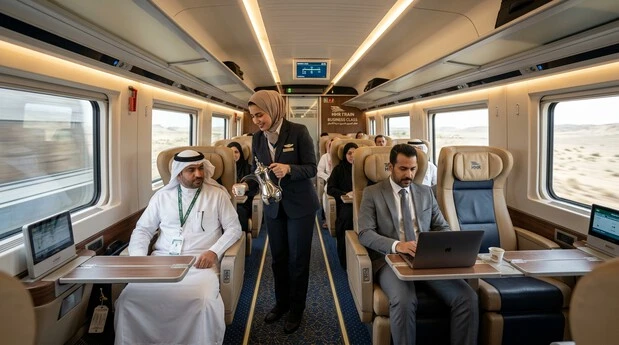
- Food and Drinks: Cafeteria in the 5th coach offers sandwiches, snacks, hot/cold drinks, and light meals. Trolley service brings options to your seat. Business Class often includes complimentary items like Arabic coffee, dates, and refreshments.
Seating and Comfort:
Economy (2+2) provides good legroom, foldable trays, headrests, and power outlets. Business (2+1) adds wider seats, extra recline, privacy, and priority service. Both classes feature clean interiors with reading lights and storage.
Journey Highlights:
- Duration: Makkah–Madinah takes ~2h 20m. Shorter segments (Jeddah–Makkah) last 45–50 minutes.
- Views: Scenic desert landscapes, occasional mountains, and modern infrastructure flash by. Windows offer great photo opportunities.
- Atmosphere: Calm and respectful. Passengers often rest, pray quietly, or chat softly. Staff remain helpful and professional.
Real travelers praise the punctuality, cleanliness, and overall comfort. Many say it transforms tiring road trips into relaxing, memorable parts of their pilgrimage.
Accessibility and Special Needs Support
HHR Train accommodates passengers with special needs effectively.
- Dedicated seats (two per train in Business Class) provide extra space.
- Priority boarding available.
- Ramps, elevators, and accessible restrooms at stations and on trains.
- Staff trained to assist with wheelchairs and mobility needs.
Special needs passengers receive discounts with valid documentation. Contact SAR in advance for assistance requests. While space resembles airplane seating, the short durations make it manageable for most. Families with elderly members or those with mobility challenges often choose Business Class for added comfort.
Practical Onboard Tips
- Dress modestly per Saudi customs.
- Keep your ticket and ID accessible for random checks.
- Use hand luggage for essentials — large bags go in designated racks.
- Stay hydrated and use the cafeteria for snacks.
- Download offline maps or entertainment if needed.
- Earplugs help sensitive passengers with occasional ear popping during high speeds.
The HHR Train experience focuses on efficiency and respect for the spiritual nature of travel between the Two Holy Mosques. Stations and onboard services reduce stress so you can focus on your worship and journey purpose.
From seamless airport connections to comfortable high-speed rides, the Haramain High-Speed Railway sets a high standard for pilgrim transport. These details help you prepare confidently for every step.
This onboard and station knowledge completes your practical planning. The following section shares real traveler reviews and extra tips to make your trip even smoother.
HHR Train Reviews & Real Traveler Tips (E-E-A-T)
Real pilgrims and travelers consistently praise the Haramain High-Speed Railway (HHR Train) for transforming travel between the Two Holy Mosques. Drawing from recent Reddit (r/Umrah), TripAdvisor, YouTube, and forum feedback in 2025–2026, the service earns strong marks for speed and comfort while highlighting areas for improvement. These authentic experiences build trust for your own Umrah or Hajj journey.
Pros from Pilgrims
Most reviewers highlight the train’s efficiency as its biggest strength.
- Speed and Punctuality: The 300 km/h ride cuts Makkah to Madinah travel to just over 2 hours. Travelers call it “life-changing” compared to 4–6 hour road trips. Many note on-time departures and smooth rides.
- Comfort and Cleanliness: Air-conditioned coaches, clean restrooms, and comfortable seats impress even in Economy Class. Business Class receives extra praise for wider seats, priority service, and quieter cabins. WiFi, power outlets, and scenic desert views enhance the short journey.
- Convenience for Pilgrims: Seamless KAIA airport connections and proximity to the Grand Mosque and Prophet’s Mosque stand out. Families appreciate easy boarding and respectful atmosphere.
- Modern Experience: Many describe it as a highlight of their Umrah, aligning with Saudi Vision 2030’s focus on quality infrastructure.
Overall ratings hover around 4.5–4.7/5 on major platforms, with repeat visitors often preferring it over buses or taxis.
Cons and Areas for Improvement
Honest feedback also points out challenges:
- Luggage Restrictions: Strict enforcement frustrates many. Some report bags sent separately or rejected, especially during peaks. Inconsistent checks lead to stress.
- Booking and App Issues: Dynamic pricing and sell-outs create frustration. The app and website occasionally glitch for international users. Customer service response times vary.
- Station Facilities: Some find waiting areas crowded with limited seating and food options. A few mention minor cleanliness or mosquito issues in Business Class.
- Peak Season Crowds: High demand during Hajj and Ramadan leads to full trains and higher prices.
These drawbacks rarely overshadow the positives for prepared travelers.
Common Issues & Practical Solutions
Sold-Out Trains
Problem: Popular routes and times fill quickly.
Solution: Book 7–30 days ahead via the official app or sar.hhr.sa. Set alerts for your dates. Consider flexible mid-week travel or Business Class for better availability. Groups should explore official group booking options early.
Delays and Schedule Changes
Problem: Occasional minor delays occur, especially in bad weather or during high volume.
Solution: Check the app 24 hours before departure. Allow buffer time at stations. No major compensation exists beyond ticket refunds in extreme cases, so plan accordingly.
Luggage Problems
Problem: Extra or oversized bags cause issues at security.
Solution: Strictly follow the 65×55×35 cm / 25 kg limit plus one small hand item. Ship excess via station courier or Saudi Post. Weigh and measure at your hotel. Business Class sometimes sees lighter enforcement. Use porters for assistance.
Other Tips:
- Carry printed or saved e-tickets and ID.
- Arrive 45–60 minutes early.
- For families, book adjacent seats together.
Best Time to Travel
- Off-Peak: Weekdays (Sunday–Wednesday) and non-festival periods offer lower prices, fewer crowds, and easier bookings. Ideal for relaxed trips.
- Peak Seasons: Hajj 2026 and Ramadan see maximum services but also highest demand and prices. Book months ahead. Night trains help align with prayer schedules.
- General Advice: Travel early morning or late evening to avoid heat and crowds. Monitor official announcements for extra trains during busy periods.
Dress Code and Prayer Times Consideration
Dress modestly in line with Saudi customs — loose, conservative clothing for both men and women. Ihram attire is common and respected on the train during Umrah seasons.
Prayer remains easy. Stations offer dedicated prayer rooms with ablution facilities. Onboard, the short duration and respectful environment allow quiet personal prayer. Many coordinate travel around Salah times using the HHR app or prayer apps. Staff accommodate where possible without disrupting schedules.
Final Traveler Wisdom
The HHR Train earns high marks from thousands of pilgrims for reliability and comfort. Its strengths far outweigh occasional issues when you prepare properly. Focus on early booking, light packing, and flexibility. This approach turns your journey into a smooth, spiritually uplifting experience rather than a logistical challenge.
Real voices from recent travelers confirm: the Haramain High-Speed Railway stands as one of the best modern additions to pilgrim travel in Saudi Arabia. Use these insights alongside official sources for the most confident and rewarding trip.
This section wraps up the practical guidance. The next part explores alternatives to the HHR Train for complete planning options.
Alternatives to HHR Train
The Haramain High-Speed Railway (HHR Train) remains the fastest and most comfortable option for most travelers between Makkah, Madinah, Jeddah, KAIA, and KAEC. However, buses, taxis, and private transfers serve as viable alternatives depending on your budget, group size, luggage needs, and schedule flexibility. Understanding these options helps you choose the best fit for your Umrah, Hajj, or tourist journey.
Quick Comparison Overview
| Option | Typical Time (Makkah–Madinah) | Approx. Cost (Economy) | Best For | Main Drawback |
| HHR Train | 2h 20m | SAR 150–250 | Speed & comfort | Strict luggage limits |
| Bus (SAPTCO) | 4–6 hours | SAR 80–150 | Budget & large groups | Traffic delays |
| Taxi | 3–5 hours | SAR 300–600+ | Small groups, door-to-door | Higher cost, bargaining |
| Private Transfer | 3–4.5 hours | SAR 400–900+ | Families, VIP, extra luggage | Most expensive |
Prices fluctuate with season, demand, and fuel costs. Peak Hajj and Ramadan periods increase all rates significantly.
Bus Services (SAPTCO and Others)
SAPTCO operates reliable intercity buses across the Hejaz region. Frequent departures run from dedicated terminals near the holy cities and airports.
- Lowest cost option
- Air-conditioned coaches with reclining seats
- Regular schedules and online booking
- Handles more luggage than HHR
- Suitable for large pilgrim groups
- Much longer travel time due to traffic and stops
- Less comfortable on long routes
- Potential delays during peak seasons
- Basic onboard facilities compared to the train
When to Choose Bus:
- Tight budget and flexible schedule
- Traveling with extra luggage or shopping items
- Group travel where cost savings matter more than speed
- Off-peak periods when roads are clearer
Many pilgrims use buses for shorter hops or when HHR tickets sell out. Book via the SAPTCO app or website for best seats.
Taxi Options
Regular taxis and ride-hailing apps (Uber, Careem) are widely available at airports, stations, and hotels.
- Door-to-door service
- Flexible timing
- Good for small groups or families
- No fixed schedule restrictions
- Significantly more expensive than train or bus
- Traffic can extend journey time dramatically
- Variable driver quality and safety
- Potential overcharging without fixed rates
When to Choose Taxi:
- Late-night arrivals with limited public options
- Short distances like Jeddah to Makkah
- When you need immediate departure after landing
- Small parties prioritizing convenience over cost
Always agree on the fare upfront or use app-based services for transparency. During Hajj, expect surge pricing and heavy traffic.
Private Transfers and Car Services
Licensed private drivers and transfer companies offer comfortable vans or sedans with professional drivers.
- Highly flexible and personalized
- Excellent for families, elderly, or those with special needs
- Ample luggage space
- Direct pickup and drop-off with possible stops
- Professional, English-speaking drivers available
- Highest cost option
- Still subject to road traffic
- Booking required in advance
- Variable quality depending on provider
When to Choose Private Transfer:
- Traveling with elderly parents or young children
- Carrying extra luggage, Zamzam water, or gifts
- Seeking maximum comfort and privacy
- Business travelers or VIP pilgrims
- When HHR tickets are unavailable and time is limited
Reputable companies often provide child seats, WiFi, and refreshments. Prices vary by vehicle type (sedan, van, or minibus). Book through trusted hotels or established agencies for reliability.
Other Factors to Consider
Luggage Flexibility: Buses and private transfers win here. The HHR Train’s strict 25 kg / 65×55×35 cm limit pushes many toward road options when carrying more items.
Cost vs Time Trade-off: For most solo or couple travelers, the HHR Train offers the best balance. Groups or budget-conscious pilgrims may prefer buses. Those valuing time and comfort stick with the train or private transfers.
Safety and Comfort: All options maintain good safety standards in Saudi Arabia. The train provides the smoothest, most modern experience with fewer variables.
Peak Season Reality: During Hajj 2026 and Ramadan, roads become congested. The HHR Train often proves more reliable despite high demand. Buses and taxis face longer delays.
Environmental Impact: The electric HHR Train aligns better with sustainable travel goals under Vision 2030.
Making the Right Choice
Choose the HHR Train for speed, comfort, and efficiency on most trips between the Two Holy Mosques. Opt for buses when saving money and handling extra bags matters most. Use taxis for short, flexible urban connections. Book private transfers for families, special needs, or premium service.
Many experienced pilgrims combine options — flying into KAIA, taking the train to Makkah, then using private transfer for return with luggage. Always check current conditions, traffic, and availability through official apps and sites.
The Haramain High-Speed Railway stands as the top recommendation for most pilgrims. However, knowing strong alternatives ensures you stay flexible and prepared for any situation.
This comparison completes the main planning sections. The final FAQ addresses common questions to wrap up your complete HHR Train guide.
Frequently Asked Questions
How to book HHR Train tickets?
Visit sar.hhr.sa or download the official HHR Train App. Select stations, date, class, and passengers. Enter details, pay with card or Mada, and receive your QR ticket instantly. Book early for best prices and availability.
What is the HHR Train luggage size limit?
Each passenger may carry one large bag (max 65×55×35 cm, 25 kg) plus one small personal item (handbag ~7 kg). Exceeding limits risks rejection at security. Measure and weigh bags before travel.
What is the Haramain train price from Jeddah to Madinah?
Economy Class starts around SAR 115–200. Business Class ranges SAR 210–380+. Prices vary by date, demand, and booking time. Check live rates on the official site.
Is Business Class worth it on HHR Train?
Yes, for longer Makkah–Madinah trips or travelers seeking extra comfort. Wider 2+1 seats, priority boarding, lounge access, and complimentary refreshments make it worthwhile. Economy suffices for shorter rides and most budget pilgrims.
How to check the live HHR Train timetable?
Use sar.hhr.sa/timetable or the HHR Train App. Enter stations and date for real-time schedules, seat availability, and updates. Check 24–48 hours before departure.
What are the main HHR Train stations?
The network includes Makkah Station, Madinah Station, Jeddah (Al-Sulimaniyah), King Abdulaziz International Airport (KAIA), and King Abdullah Economic City (KAEC). All feature modern facilities and prayer rooms.
Can I take extra luggage on the Haramain train?
No. Strict enforcement applies. Ship excess bags via station courier or Saudi Post. Use private transfers or buses if you have heavy luggage.
How long is the HHR Train journey from Makkah to Madinah?
The trip takes approximately 2 hours and 20 minutes at up to 300 km/h. Shorter routes like Jeddah to Makkah take 45–50 minutes.
Does the HHR Train have WiFi, food, and other facilities?
Yes. Free WiFi, power outlets, clean toilets, and air-conditioning are standard. A cafeteria in the 5th coach offers snacks and drinks. Trolley service reaches your seat.
When is the best time to book HHR Train tickets during Hajj 2026?
Book several months in advance for Hajj and Ramadan peaks. Early reservations secure lower prices and seats. Monitor the app for extra trains and promotions.
What are the best tips for taking the HHR Train from Jeddah Airport to Makkah?
Book in advance, follow “Trains” signs after customs, and arrive at the station early. Allow 1–2 hours for connections. This route offers a fast, stress-free transfer.
What documents do I need for the HHR Train?
Valid passport, Iqama, or national ID. Names on tickets must match exactly. Carry your QR e-ticket on your phone or printed.
Are there discounts or promo codes for the Haramain train?
Yes. Seasonal offers, Eid discounts, and early-bird deals appear regularly. Check the official site and app. Children and special needs passengers often qualify for reductions.
How early should I arrive at the HHR station?
Arrive 45–60 minutes before departure. Allow extra time during Hajj, Ramadan, or busy periods for security and boarding.
What should I do if HHR Train tickets are sold out?
Check nearby dates, consider Business Class, or use the app for alerts. Alternatives include SAPTCO buses, taxis, or private transfers. Book earlier next time.
Can families or groups book seats together on the HHR Train?
Yes. Select seats together during booking or use group booking options for 11+ passengers. Book early to secure adjacent seats.
Is the HHR Train safe and suitable for elderly pilgrims?
Yes. It offers smooth, air-conditioned travel with accessibility features. Business Class provides extra comfort for seniors and those with special needs.
Conclusion
The HHR Train (Haramain High-Speed Railway) delivers the fastest, safest, and most comfortable way to travel between the Two Holy Mosques. With speeds up to 300 km/h, modern Talgo trains, and seamless connections across Makkah, Madinah, Jeddah, KAIA, and KAEC, it turns long, tiring journeys into smooth, relaxing experiences.
Pilgrims and travelers benefit from reliable schedules, clean facilities, free WiFi, and two excellent travel classes. Whether you choose affordable Economy or premium Business, the HHR Train reduces stress, saves valuable time, and supports your spiritual focus during Umrah or Hajj. Its alignment with Saudi Vision 2030 makes it a symbol of modern, sustainable pilgrim mobility.
This guide covered everything — from routes and timetables to booking steps, luggage rules, onboard tips, real reviews, and alternatives. Follow the advice here to avoid common issues like sell-outs or excess baggage and enjoy a seamless trip.